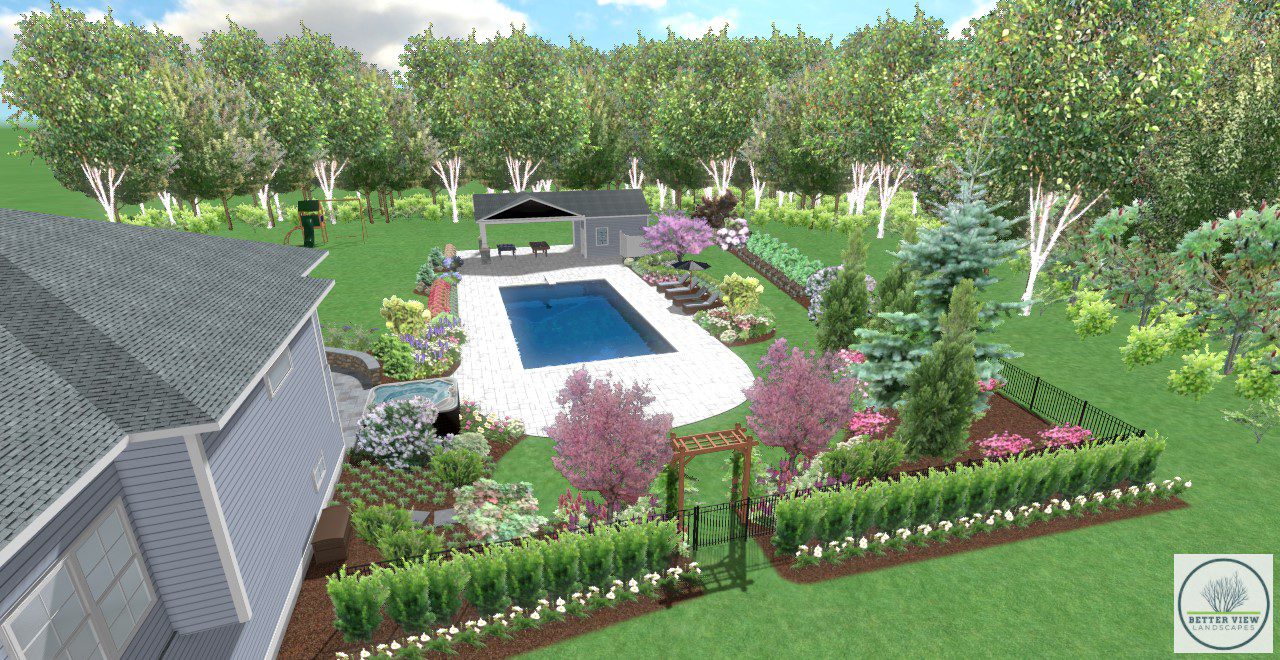
Congratulations on your newly installed lawn or meadow! As a seasoned professional with years of experience in transforming homeowners’ green dreams into stunning realities, I understand the excitement and anticipation you’re feeling right now. Your vision of a lush lawn or vibrant meadow is now coming to life, and I’m here to guide you in maintaining its beauty and health.
Consistent, accurate watering is the key to ensuring your new landscape flourishes. Traditional watering methods like hand-watering or dragging hoses around the yard can be time-consuming and often inefficient, especially for larger areas.
In cases where a permanent irrigation system isn’t feasible, I strongly advocate for setting up a temporary watering system. Over the years, we’ve recommended and installed these systems for numerous clients, tailoring each one to their unique requirements. Combining store-bought sprinkler heads, hoses, and spigot-attaching timers, these systems can deliver the right amount of water at the right times, promoting healthy and even growth across the entire seeded area.
Here’s the beauty of these systems: they’re flexible. You can assemble and disassemble them as needed, making them ideal for newly seeded lawns or meadows. They’re also versatile and adjustable, able to be customized to any lawn or meadow size. Do remember, though, that the number of sprinklers you can connect depends on your water source and pressure.
Now, let’s get into the specifics. I’ll share our tried-and-true method for setting up a temporary watering system and walk you through the necessary parts and setup steps.
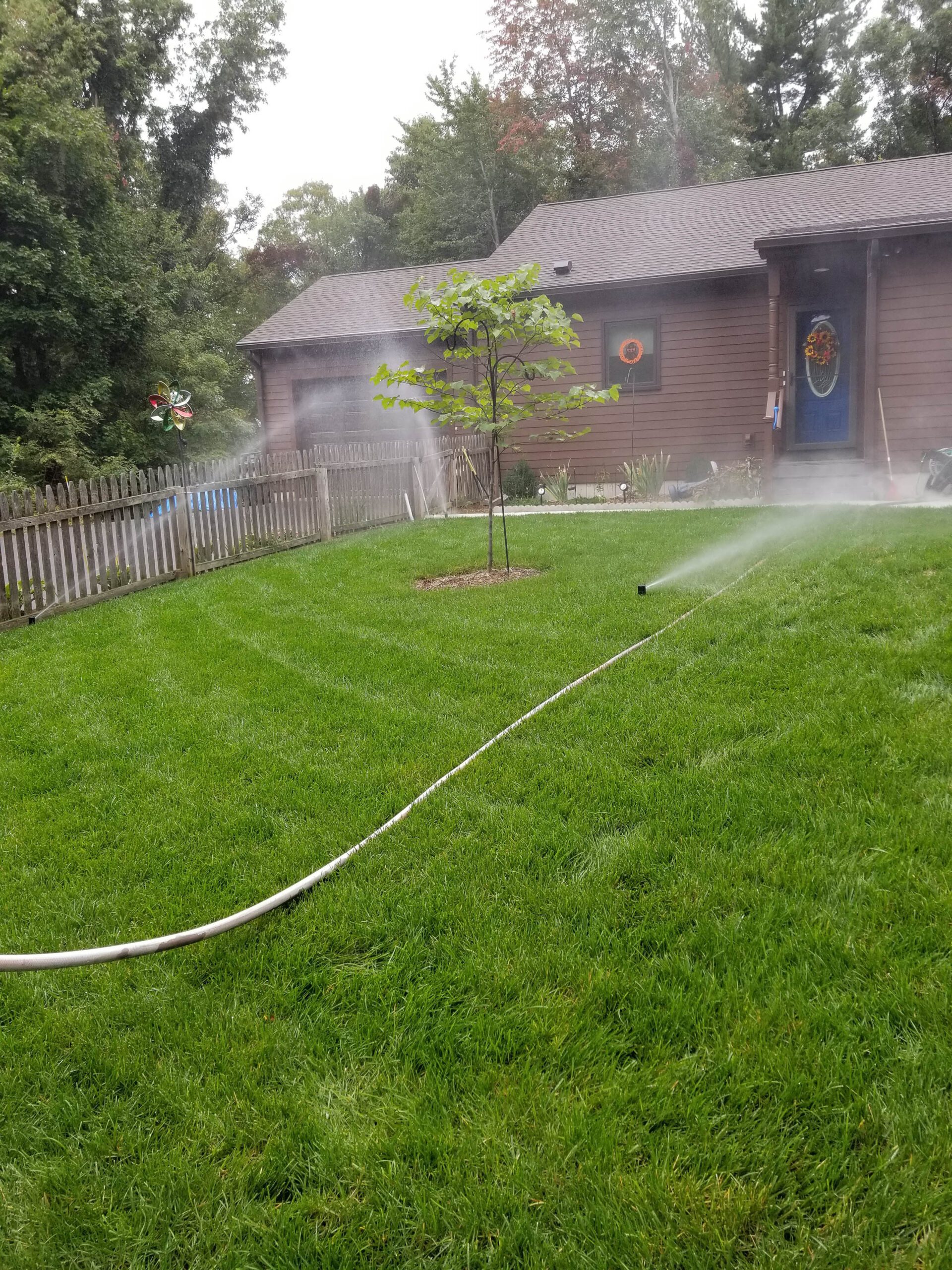
Essential Parts for Your Watering System
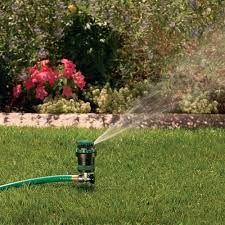
Sprinklers
Choosing the right sprinkler is crucial. We recommend for their excellent coverage and adjustability.:
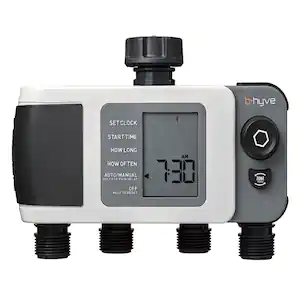
Timers
To save time and enhance efficiency, opt for programmable timers. Depending on your setup and the number of “zones” you have (sprinklers set up on one line), you can select from single timers or 4-in-1 programmable timers. We recommend the following models for their reliability and availability:

Hoses
Your setup will require hoses of various lengths. Typically, we use 25’ hoses to connect sprinklers and a mix of 50’ and 100’ hoses to connect the first sprinklers to the spigot. The best lengths for you will depend on your water source’s location and layout. We suggest a mid-grade ⅝ hose for cost-effective durability.
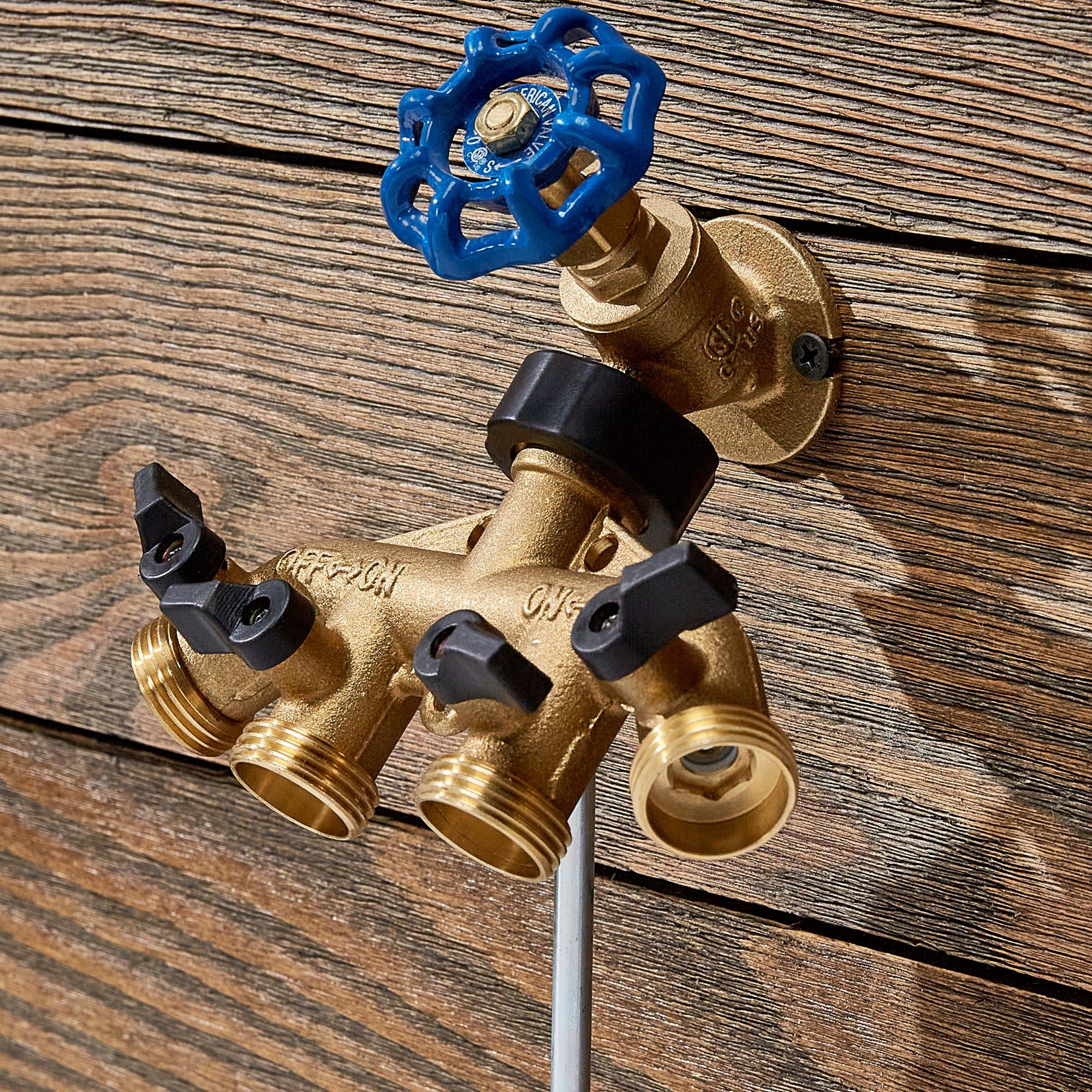
Manifolds
Manifolds come in handy when connecting multiple lines to the same spigot, allowing access to water for other uses without disrupting your watering setup. We recommend:
Setting Up A Watering Zone
Here’s a step-by-step guide to setting up a watering zone:
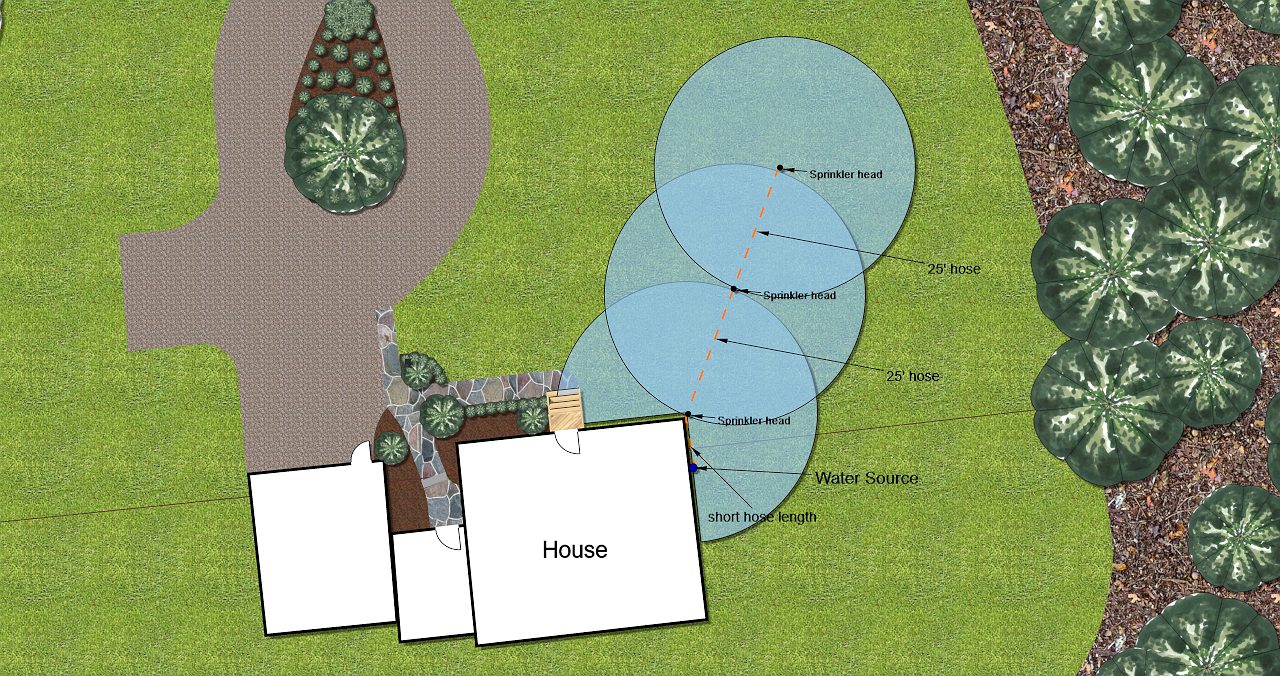
- Determine the Number of Sprinklers: Figure out how many sprinklers you can set up per hose line to maintain a 15-25’ spray distance, considering your water source and pressure.
- Attach Timers: Connect the timer(s) to the water source.
- Layout Sprinklers: Position the sprinklers so that the spray from one reaches the next one. Adjust the spray type as needed (medium and large sprays are often suitable).
- Connect Sprinklers: Use a 25’ hose to connect between sprinklers.
- Connect to Timer: Use a hose of the correct length to connect the first sprinkler to the timer.
- Test and Adjust: Turn on the water and adjust the spray distance and degree of rotation to cover the watering area adequately.
Repeat: Repeat these steps for each of your zones to ensure full coverage of your newly seeded area.
Remember, your newly seeded lawn or meadow will thrive with consistent and adequate watering. A well-planned temporary watering system can help you achieve that while saving time and effort. Here’s to your green journey!
For visual guidance, these YouTube videos might be helpful: